
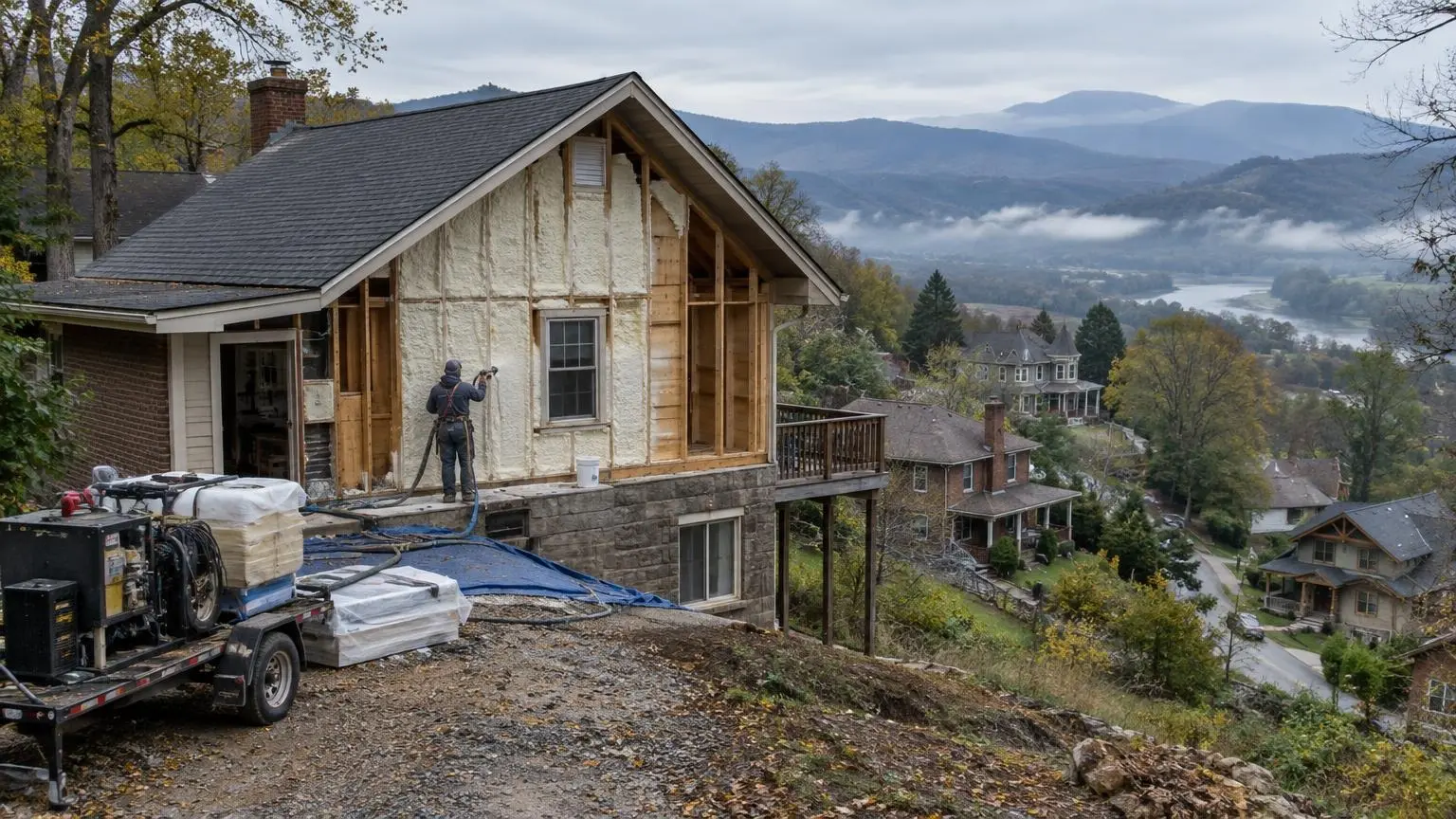
Seal the attic, then insulate it
Attic Insulation & Air Sealing in Asheville, NC
Most of the heat a house loses in winter leaves through the top.
- Free on-site estimates
- Written quote with material, thickness and R-value for each area
- Crawl space moisture checked before anything is sealed
Seal First, Then Add Depth
Attic insulation and air sealing usually go together. Warm air rises, and in an Asheville house it escapes through every gap in the top-floor ceiling: around plumbing vents, chimney chases, recessed lights, bath fans, the attic hatch and the top plates of interior walls. Adding insulation over those gaps without sealing them leaves the leaks in place. We seal first, then add depth.
What R-value your attic needs
The 2018 North Carolina Energy Conservation Code lists R-38, or R-30 continuous insulation, for ceilings in new construction. For existing homes, ENERGY STAR sets a higher target in Zone 4A, where OpenEI's county list places Buncombe, Henderson, Haywood and Madison counties: reach R-60 if the attic has no insulation, or add about R-49 if 3 to 4 inches is already there. Many older attics around Asheville have far less, sometimes a few inches of settled fiberglass that has been stepped on for decades.
Blown-in or spray foam?
There are two common approaches. The first keeps the attic vented and treats the attic floor: seal the bypasses with foam and caulk, then blow cellulose or fiberglass to depth. For most attics with a reasonable floor, that is the lower-cost route. The second moves the insulation to the roofline with foam under the roof deck, making the attic part of the house. That suits attics with ductwork or equipment in them, vaulted ceilings and complicated roofs with little floor space. We explain which one fits and price both if both would work.
Kneewalls, bonus rooms and hatches
Many homes here have rooms built into the roof: upstairs bedrooms with sloped ceilings and short kneewalls, and bonus rooms over garages. These are common trouble spots. The space behind a kneewall is often open to the floor joists below, so air runs straight under the room. We seal and insulate the kneewall, block the joist bays, and insulate the sloped ceiling where it can be reached. Attic hatches and pull-down stairs get weatherstripped and insulated covers.
Ventilation still matters
A vented attic needs clear soffit vents and a path for air to the ridge or roof vents. Before blowing insulation to depth, baffles go in at the eaves to keep the vents open. Bath fans that dump into the attic get pointed outside. Those details keep moisture from building up in the attic in winter.
Attic Work We Do
Typical pieces of an attic job:
Bypass sealing
Foam and caulk at plumbing stacks, wiring holes, top plates and chases.
Blown-in to depth
Cellulose or fiberglass blown to the target R-value with depth markers.
Roofline foam
Foam under the roof deck for unvented attics and vaulted ceilings.
Kneewall and bonus room work
Seal and insulate short walls, joist bays and sloped ceilings.
Hatch and stair covers
Weatherstrip and insulate access points.
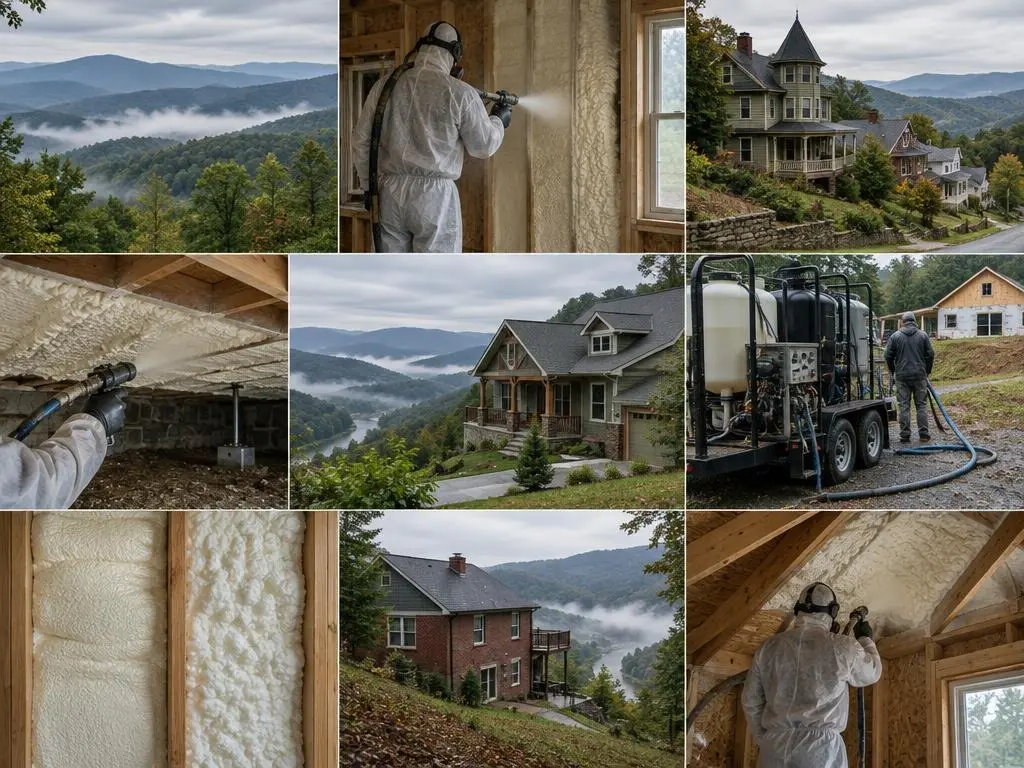
Published Attic Insulation & Air Sealing Costs
| Job | Published range (source) |
|---|---|
| Attic insulation, typical job | $1,000 to $2,700, about $1,800 on average (HomeGuide) |
| Attic air sealing | $350 to $3,000 (HomeGuide) |
| Blown-in, attic floor | $0.90 to $2.40 per sq ft (HomeGuide attic guide) |
| Spray foam on the attic floor | $1,100 to $6,800 (HomeGuide) |
| Spray foam under the roof deck | $1,500 to $9,000 (HomeGuide) |
| Attic, spray foam | $3,000 to $8,000 (HomeGuide); $2,500 to $12,000 existing home (Fixr) |
| Old attic insulation removed | $1 to $2 per sq ft (HomeGuide) |
National numbers from HomeGuide's January 2026 attic guide and 2026 spray foam guide, plus Fixr (2025). Sealing time, depth, access and removal change your price. We quote after looking, and the written estimate is what you pay.
How an Attic Job Goes
1. Look and measure
We check depth, condition, ventilation and leaks, and look for wiring or vermiculite issues.
2. Quote
You get the plan, target R-value and price in writing.
3. Seal
Bypasses, chases and top plates are sealed, and baffles go in at the eaves.
4. Insulate
Blown-in to depth or foam at the roofline, then cleanup.
Attic Insulation & Air Sealing Questions
How do I know if my attic needs more insulation?
If you can see the tops of the ceiling joists, there is not enough. Uneven rooms, high bills and ice at the eaves on cold days are other signs.
Can you add to the insulation that is there?
Usually yes, if it is dry and clean. Wet, moldy or rodent-damaged insulation should come out first.
Will air sealing make my house too tight?
Most older houses leak far more than they need. If a house becomes much tighter, fresh air and combustion appliances should be considered, and we will point that out.
Is spray foam in the attic worth it?
It can be, especially with ducts or equipment in the attic or a complicated roof. For a simple open attic floor, blown-in over sealed leaks is usually the better value.
Attic Insulation & Air Sealing Service Areas
- Spray Foam Insulation in Asheville, NC
- Spray Foam Insulation in Black Mountain, NC
- Spray Foam Insulation in Swannanoa, NC
- Spray Foam Insulation in Weaverville, NC
- Spray Foam Insulation in Woodfin, NC
- Spray Foam Insulation in Fairview, NC
- Spray Foam Insulation in Fletcher, NC
- Spray Foam Insulation in Arden, NC
- Spray Foam Insulation in Candler, NC
- Spray Foam Insulation in Leicester, NC
- Spray Foam Insulation in Hendersonville, NC
- Spray Foam Insulation in Mills River, NC
- Spray Foam Insulation in Canton, NC
- Spray Foam Insulation in Waynesville, NC
- Spray Foam Insulation in Mars Hill, NC
- Spray Foam Insulation in Marshall, NC
Get an Attic Insulation & Air Sealing Estimate
Let us measure your attic and send a written price.