
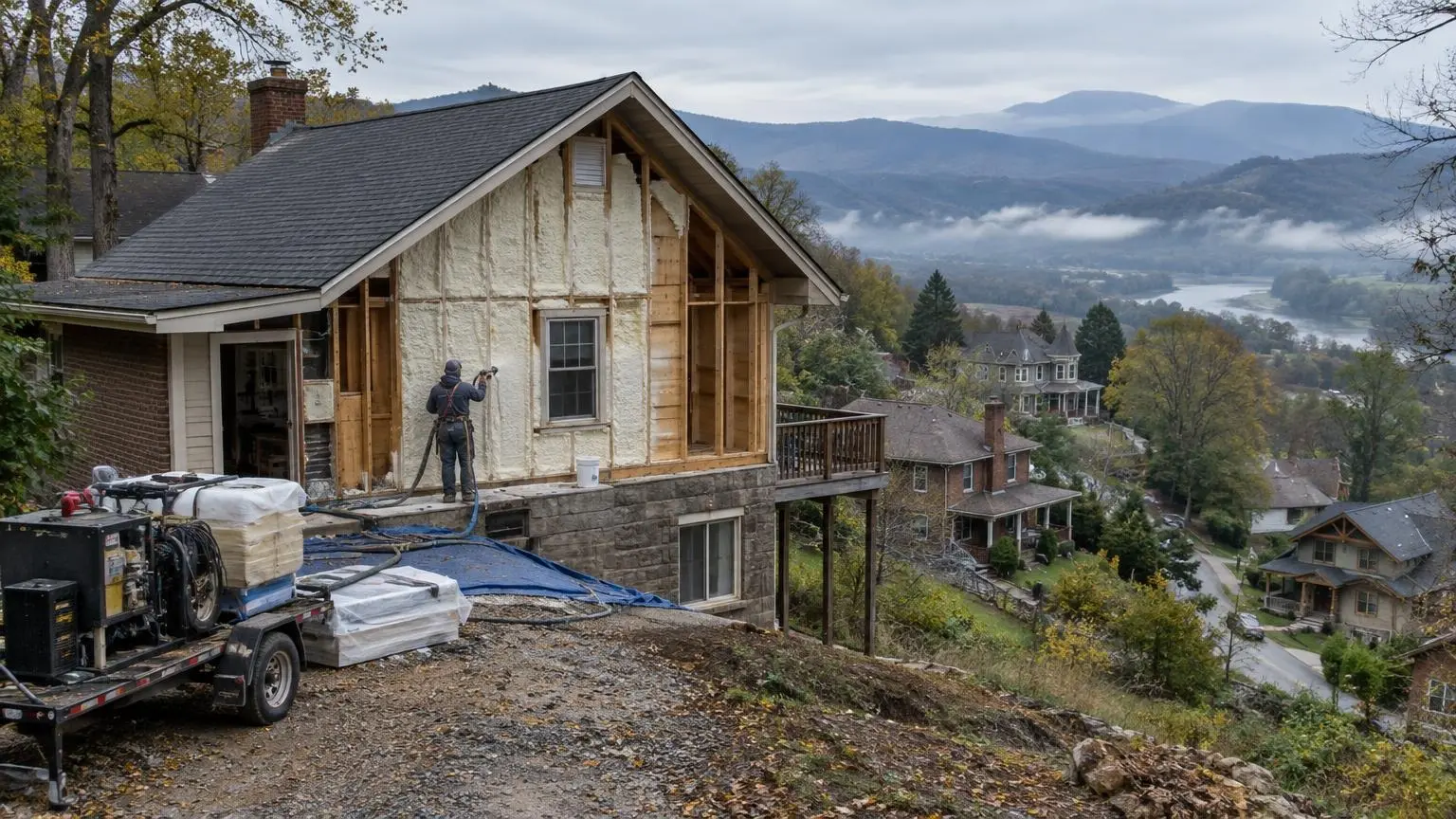
Sealed, lined and insulated crawl spaces
Crawl Space Encapsulation & Insulation in Asheville, NC
Keep humid air and ground moisture out from under your floors.
- Free on-site estimates
- Written quote with material, thickness and R-value for each area
- Crawl space moisture checked before anything is sealed
Why Crawl Spaces Matter So Much Here
Crawl space encapsulation and insulation is often the most useful work we do in Asheville. Many houses here sit over a vented crawl space on a sloped lot, and summer air in these valleys is humid. When that air flows through open vents and touches cool floor joists and ductwork, it condenses. Over time that shows up as sagging batts, musty smells, cupped floors and mold on the framing. Sealing the crawl space and insulating its walls takes that path away.
What encapsulation includes
A full encapsulation closes the crawl space off from outdoor air and from the ground. The vents get sealed. A heavy liner covers the floor and runs up the walls, with seams taped. The rim joist and walls get closed-cell foam, which insulates and slows vapor in one layer. Then the space needs a way to stay dry: a dehumidifier sized for the crawl space, or a small supply of conditioned air, depending on the house. If the crawl space takes on water, drainage comes first.
Floor insulation or wall insulation?
There are two ways to insulate over a crawl space. One is to insulate the floor above it, which leaves the crawl space outside the house. ENERGY STAR's target for a floor in Zone 4A is R-19. The other is to insulate the crawl space walls and bring the space inside the house. In humid mountain valleys, the second approach usually keeps ducts, plumbing and framing drier, because the space is no longer fed outdoor air. We explain the trade-offs for your house and price the option that fits.
After a flood
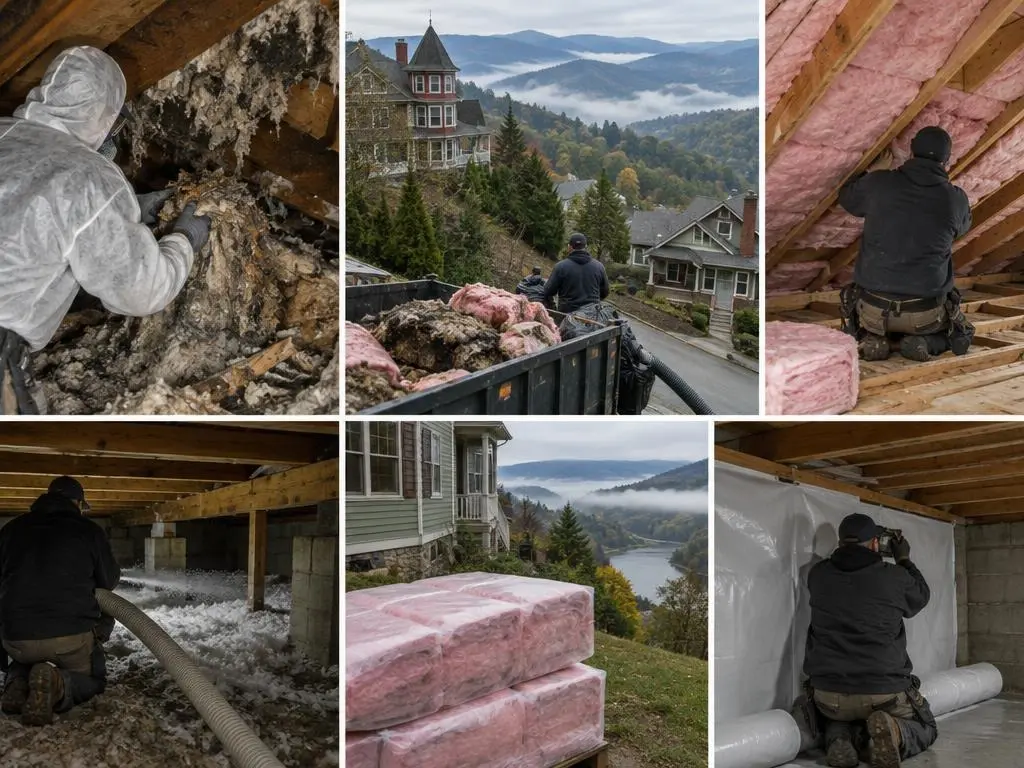
Helene's record flooding in September 2024 put water into crawl spaces from Swannanoa to Marshall. If yours flooded, the old insulation almost certainly needs to come out: wet fiberglass holds moisture against the subfloor and rarely dries back to its original loft. We remove it, let the space dry, check the framing, and only then talk about sealing and insulating. If water keeps returning, the plan includes drainage before a liner goes in.
Signs your crawl space needs attention
- Musty smell inside the house, especially in summer
- Batts hanging or lying on the ground
- Cold floors in winter
- Condensation on ductwork or pipes
- Standing water or wet soil after storms
- Visible mold or dark staining on joists
What the Work Covers
Pieces of a typical encapsulation:
Vent sealing
Close the foundation vents so humid outdoor air stops flowing through.
Liner and seams
Heavy liner across the floor and up the walls, with seams sealed.
Closed-cell foam walls and rim
Insulate and air seal the walls and the band joist.
Moisture control
A crawl space dehumidifier or conditioned supply, sized to the space.
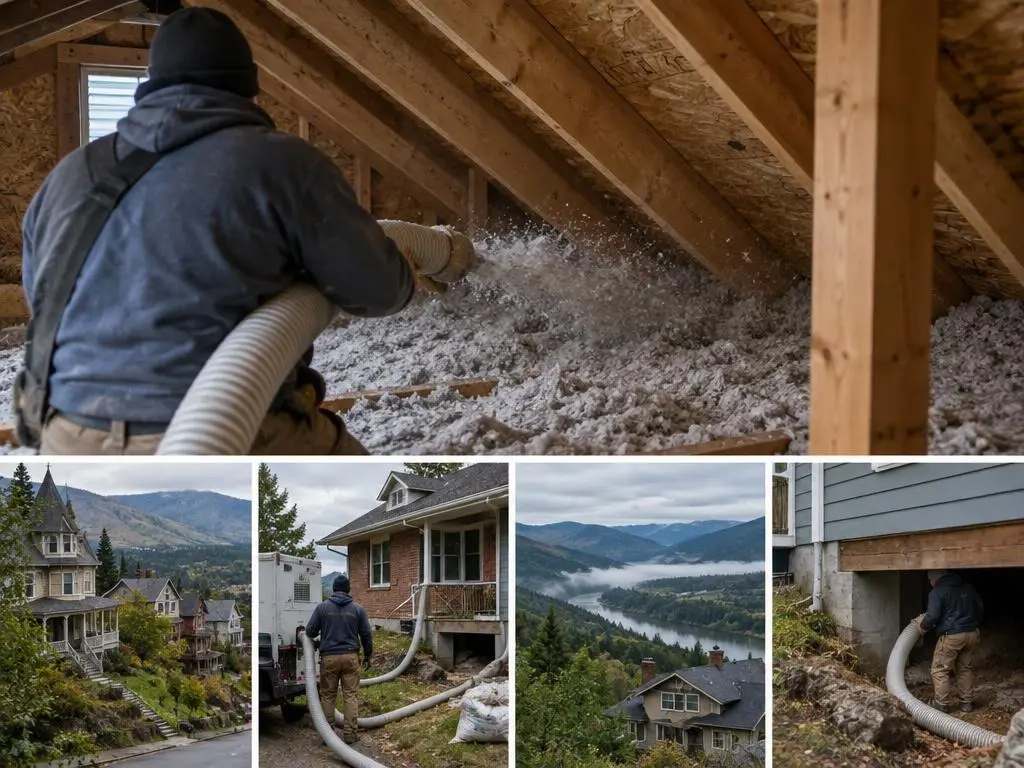
Old insulation removal
Wet or fallen batts pulled out and disposed of before sealing.
Published Crawl Space Costs
| Job | Published range (source) |
|---|---|
| Crawl space encapsulation | $3 to $10 per sq ft; $3,000 to $15,000 total (HomeGuide) |
| Crawl space vapor barrier | $1,200 to $4,000 (HomeGuide) |
| Closed-cell foam on crawl space walls | $2 to $5 per sq ft (HomeGuide) |
| Sealing crawl space vents | $150 to $450 (HomeGuide) |
| Crawl space, spray foam | $2,000 to $4,000 (HomeGuide); $1,000 to $5,900 (Fixr) |
| Rim joists, spray foam | $2,000 to $2,500 (HomeGuide) |
Figures come from HomeGuide's 2026 crawl space and spray foam guides and Fixr's 2025 spray foam guide. Crawl height, wall area, water problems and removal change the total a great deal. The written estimate we give you after looking is the price.
How a Crawl Space Job Runs
1. Inspection
We go in, check moisture, framing, ducts and existing insulation, and take photos.
2. Water first
Any drainage, gutter or plumbing issue that puts water in the crawl space is addressed or flagged.
3. Remove and clean
Old batts and debris come out and the space is prepped.
4. Seal, line and insulate
Vents sealed, liner installed, foam on walls and rim, moisture control set up.
Crawl Space Encapsulation & Insulation Questions
Do I need a dehumidifier after encapsulation?
Usually some form of drying is needed, because a sealed crawl space is no longer flushed by outdoor air. That can be a dehumidifier or a small supply of conditioned air. We size it to your space.
Will encapsulation help my floors feel warmer?
Yes. Insulating the walls and rim and stopping drafts under the floor raises floor temperatures in winter, especially in rooms over the crawl space.
My crawl space is very low. Can it still be done?
Often yes, though tight access adds labor. We check clearance during the visit and price accordingly.
Is a vapor barrier alone enough?
A ground liner helps, but with open vents humid air still comes in. Full encapsulation seals the vents and insulates the walls too.
Crawl Space Encapsulation & Insulation Service Areas
- Spray Foam Insulation in Asheville, NC
- Spray Foam Insulation in Black Mountain, NC
- Spray Foam Insulation in Swannanoa, NC
- Spray Foam Insulation in Weaverville, NC
- Spray Foam Insulation in Woodfin, NC
- Spray Foam Insulation in Fairview, NC
- Spray Foam Insulation in Fletcher, NC
- Spray Foam Insulation in Arden, NC
- Spray Foam Insulation in Candler, NC
- Spray Foam Insulation in Leicester, NC
- Spray Foam Insulation in Hendersonville, NC
- Spray Foam Insulation in Mills River, NC
- Spray Foam Insulation in Canton, NC
- Spray Foam Insulation in Waynesville, NC
- Spray Foam Insulation in Mars Hill, NC
- Spray Foam Insulation in Marshall, NC
Get a Crawl Space Encapsulation & Insulation Estimate
Get your crawl space looked at and priced in writing.